Gratitude feels good!

As we head into a season where many nonprofits are working on their annual reports… here are five simple tips, in no particular order, that can help you turn your (possibly) boring Annual Report into a love-filled Gratitude Report.

Tip #1 - Less cheques, more hearts

I’m not sure about you, but I’ve seen my fair share of annual reports packed with photos of donors holding abnormally large cheques.

My guess is that no one really cares much about those photos, except maybe the person holding the cheque.

What donors DO care about is how their giving is making a difference to the cause they care so much about.

Make sure your report says thank you, expresses gratitude, and clearly shows how donations helped make the accomplishments from the past year possible.

Avoid talking all about ‘we’ (the organization) and talk more about ‘you’ (the donor) and the motivations for giving — the end result of your donor’s gifts in action.

Tip #2 - Bring your donor into your story!

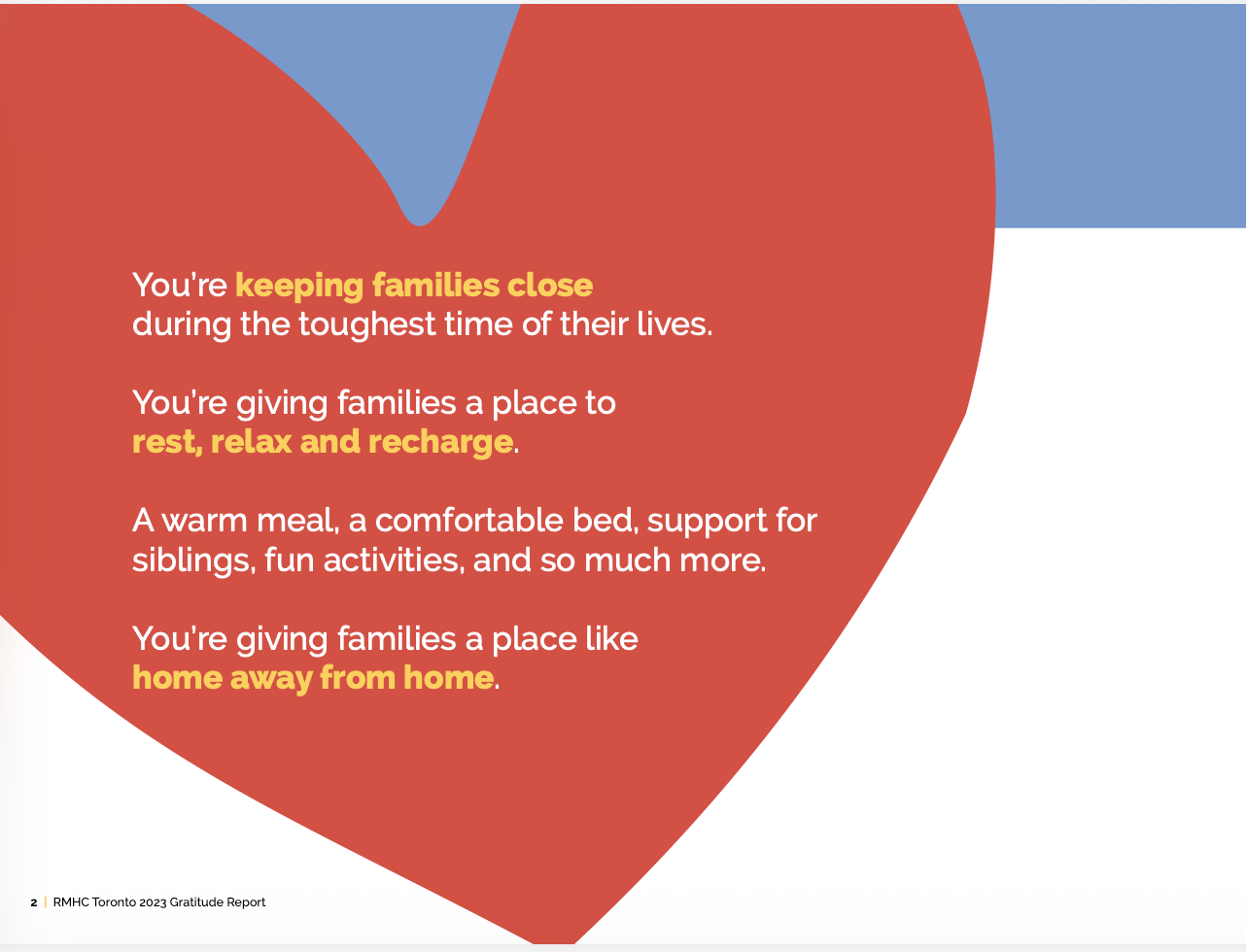
This can be as simple as adding in some ‘you’-focused headlines and copy.

Or, you can go a lot deeper! My friends at agents of good are known for their unique, conversation-starting gratitude reports. I’ve written several of them myself!

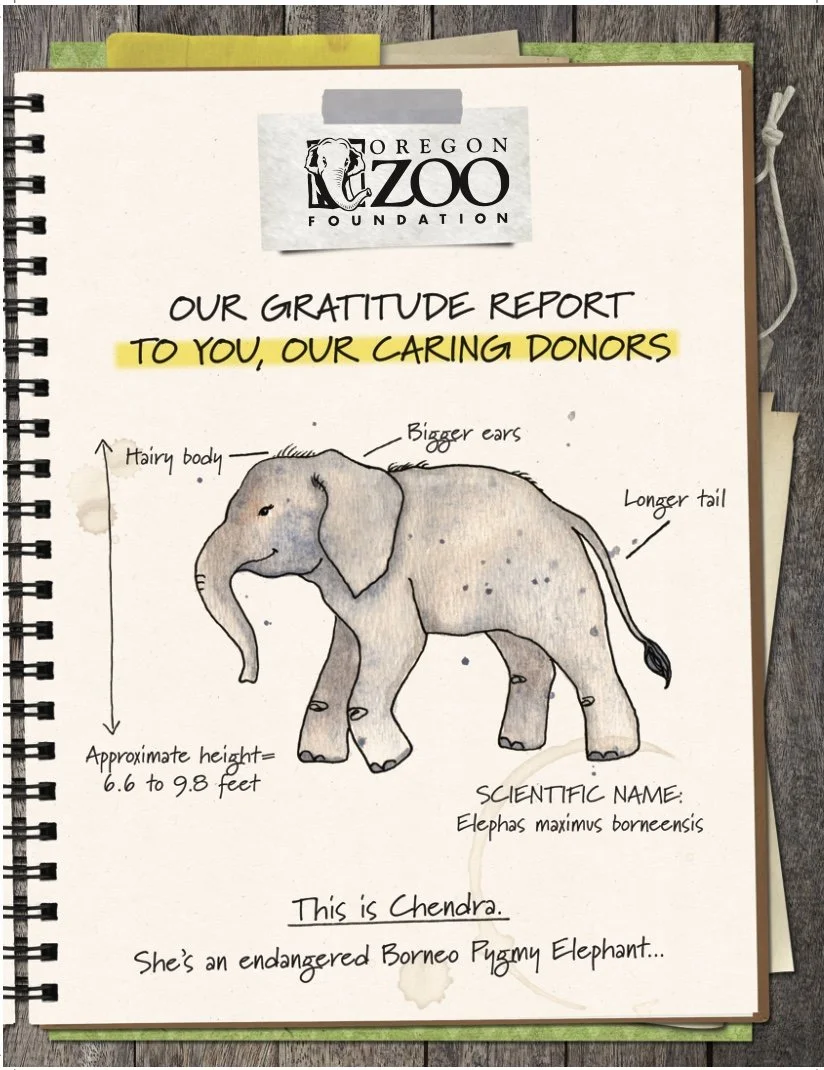
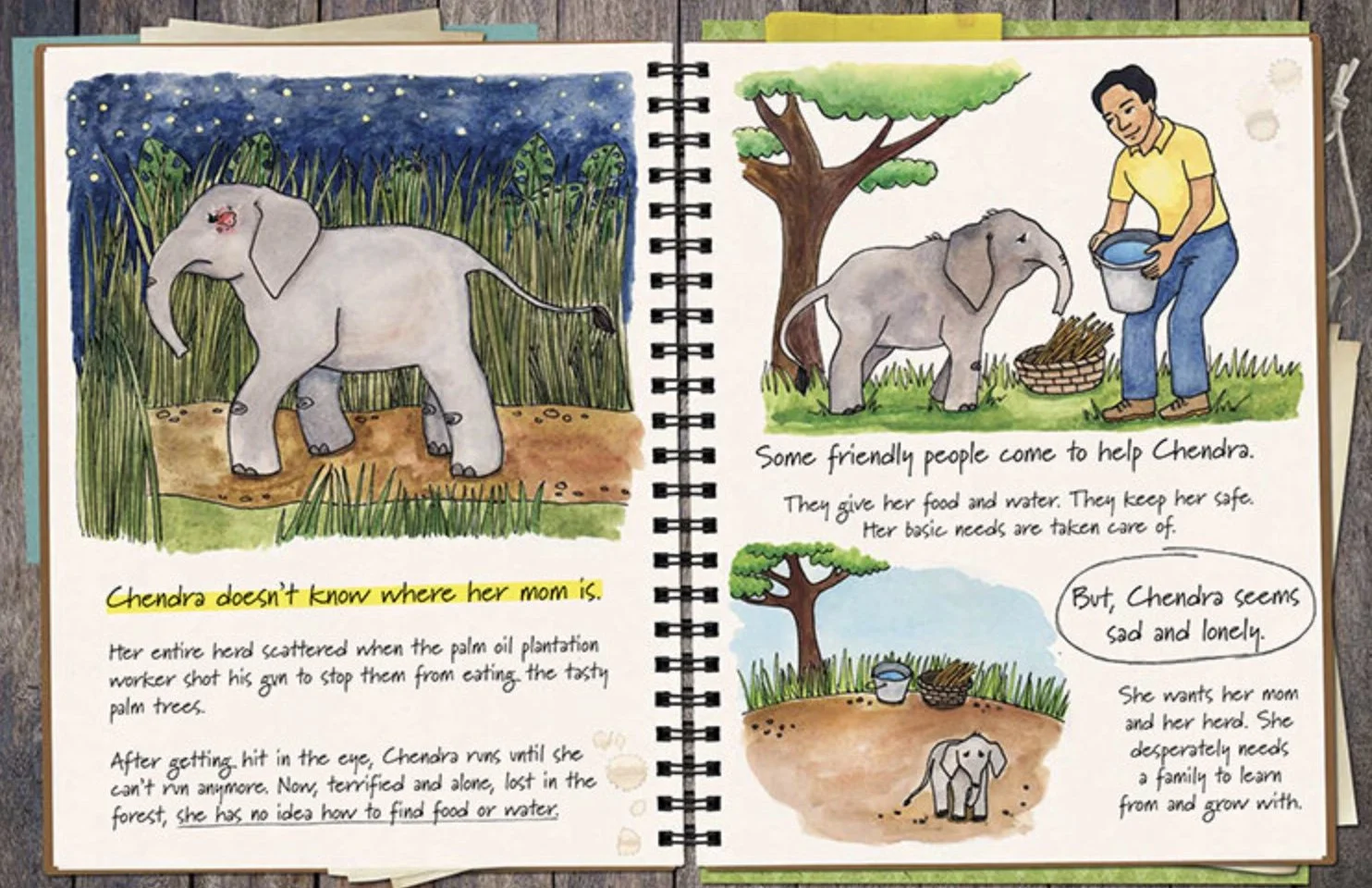
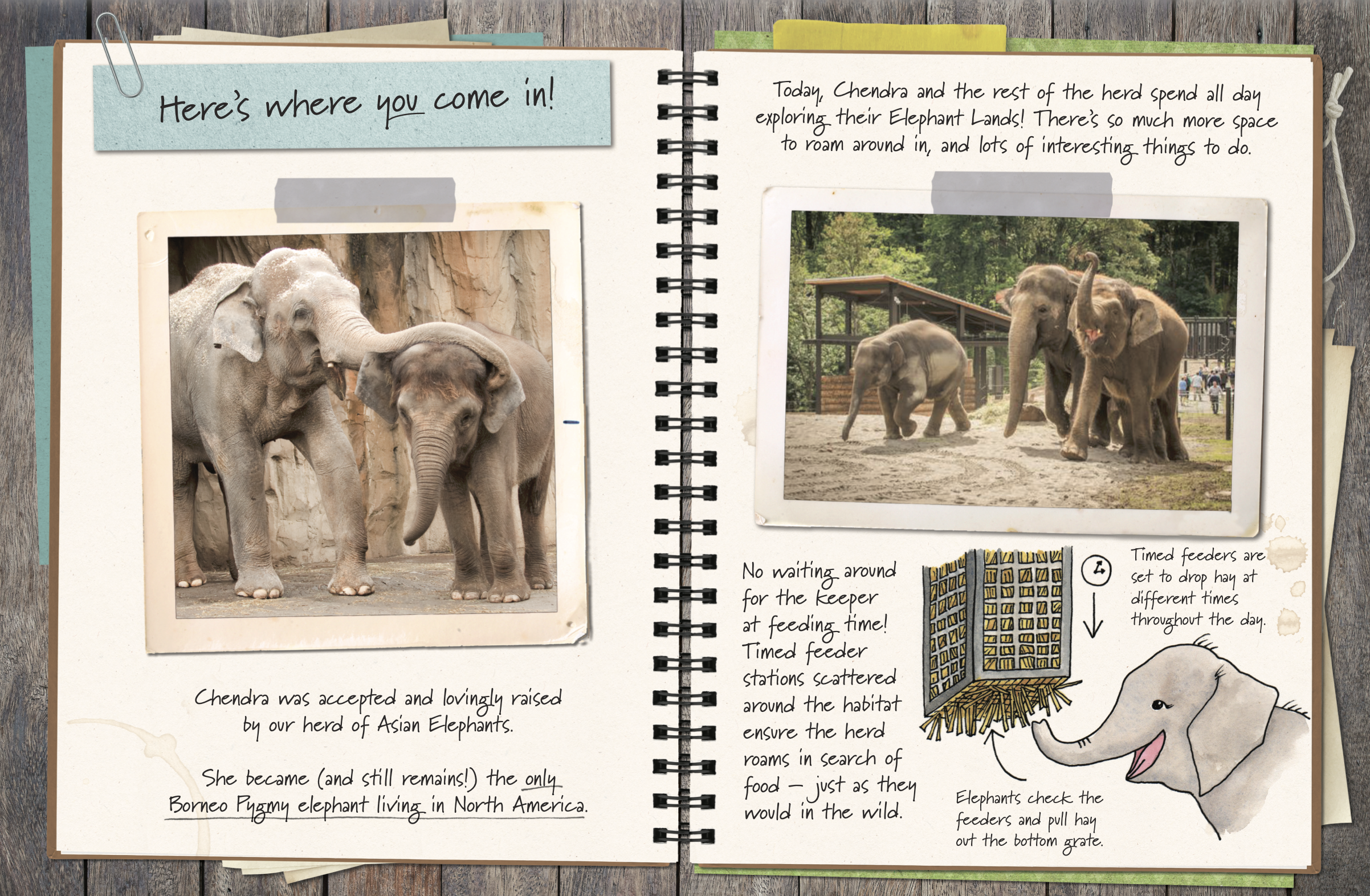
One way to bring your donor into the story is to actually write your Gratitude Report in the form of a story. Dive deep into how donors helped your story come into being.

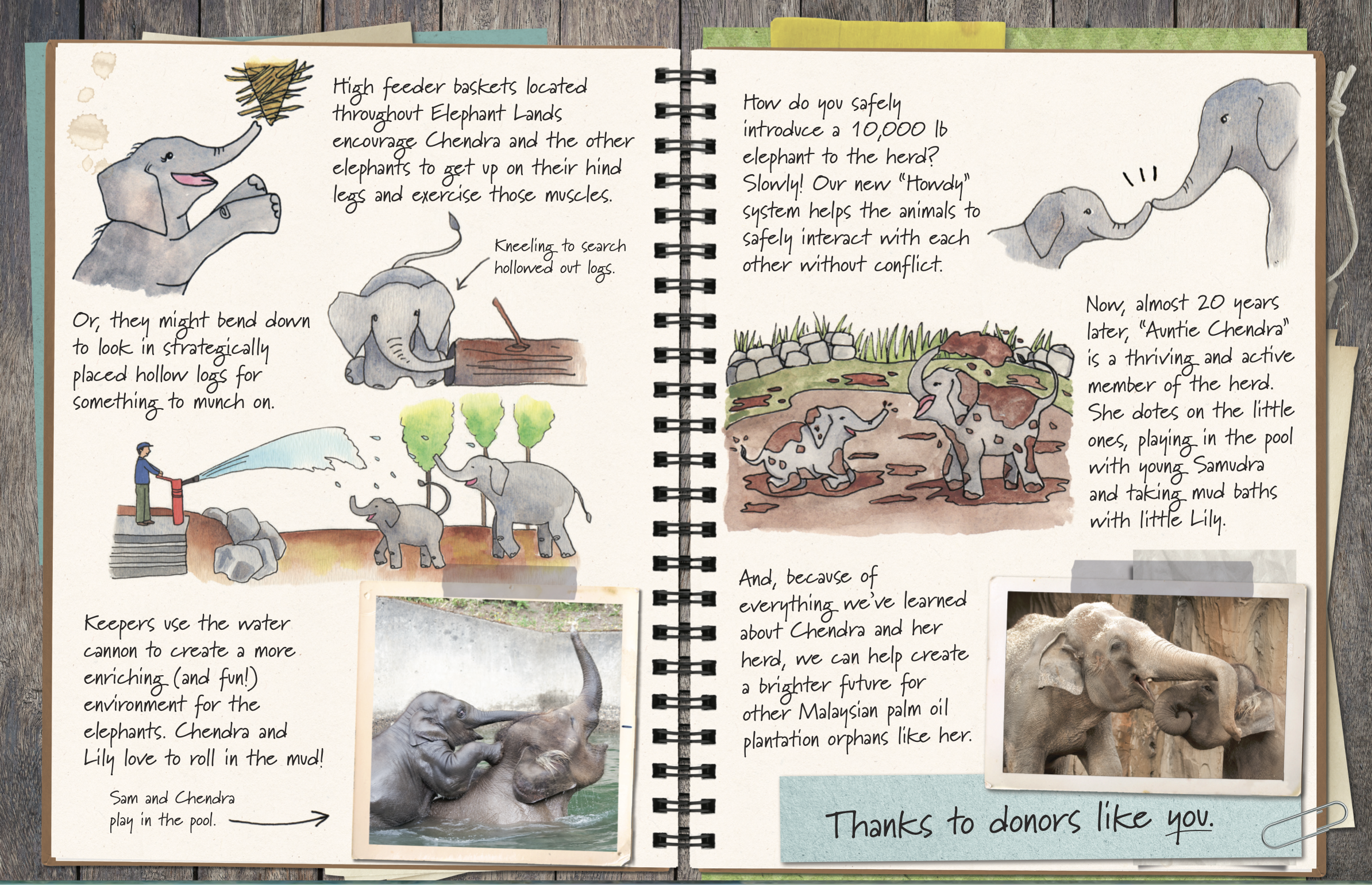
In this example, the story centres around Chendra the elephant. Yes, the Zoo helps many animals and not just one elephant, but this story illustrates the overall impact of donor support in a tangible — and emotional — way.

The end of this report did also feature more information on how donations helped over the year (along with the obligatory pie charts, which were designed in the same illustrative style as the rest of the report!).

I hope you’ll agree — this approach makes your donor actually feel something and experience the true impact of their giving in action.

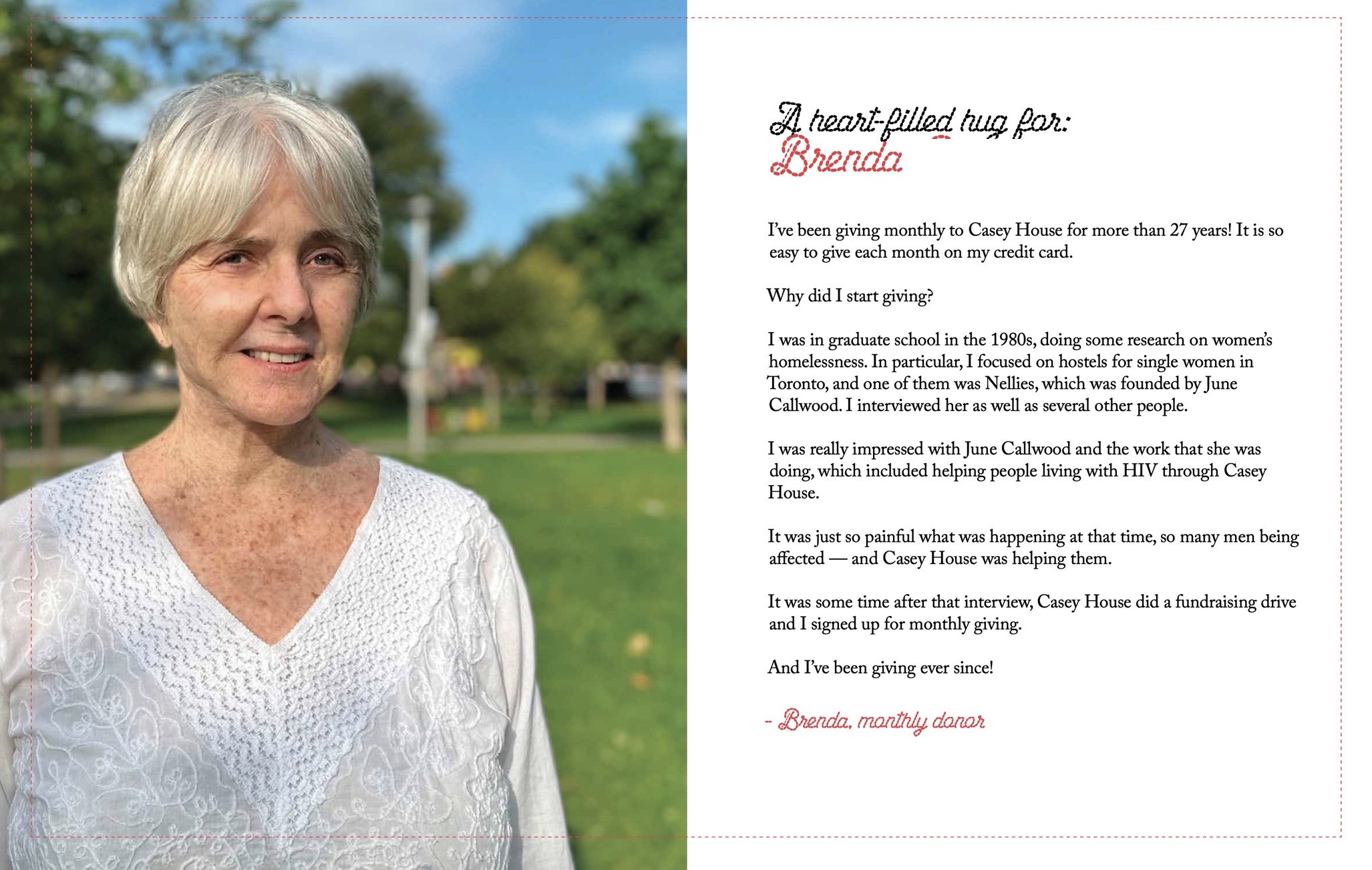
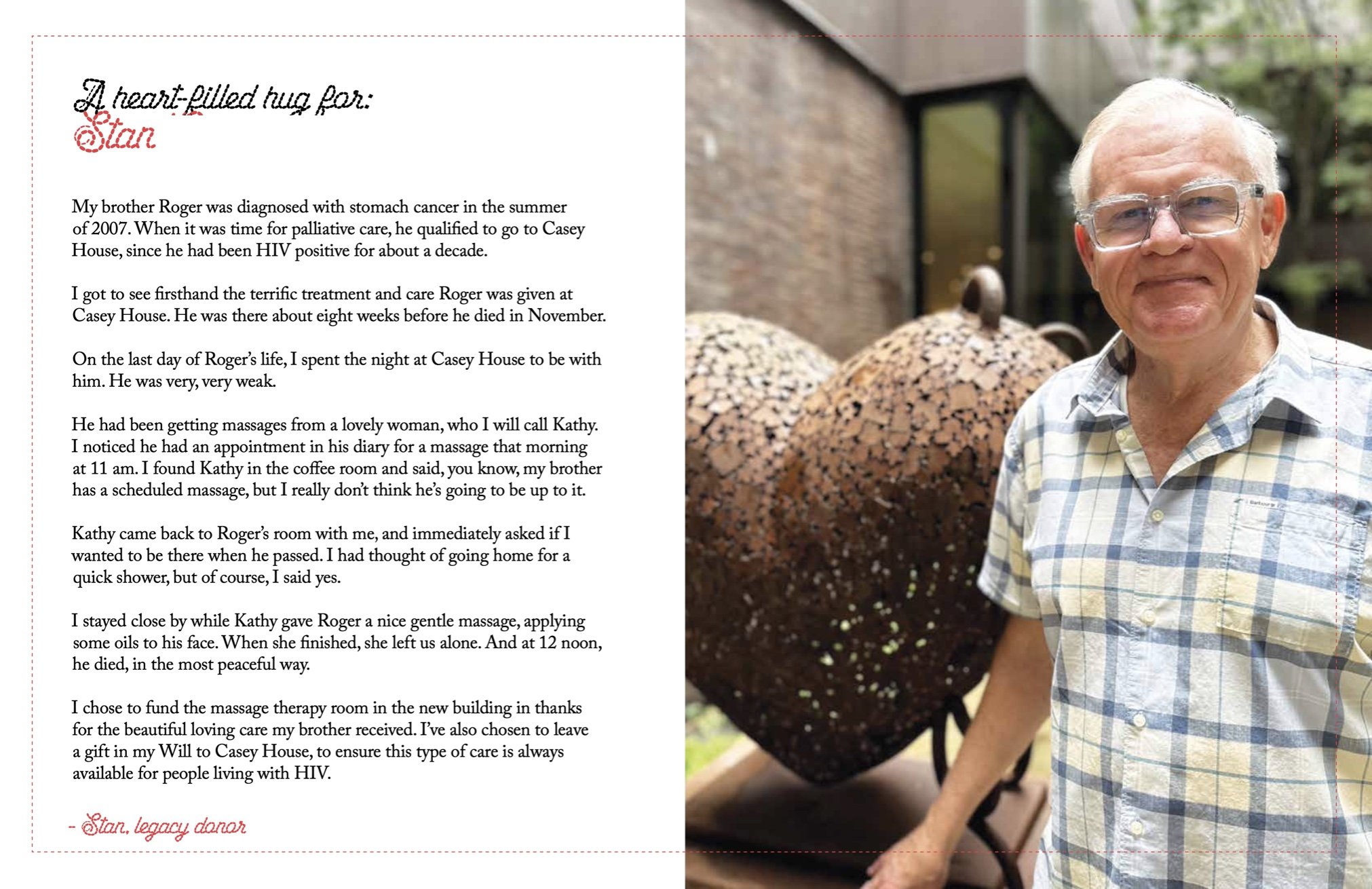
Another approach you could try is to feature some of your donors and their ‘why’ or reasons for giving. If done well, this approach can help your donors feel part of a community — activating ‘social proof’.

TIP: make sure you feature all types of donors, not just your major or corporate donors!

For one client, I interviewed a monthly donor, legacy donor, a volunteer, and several donors who had been giving for a number of years. Everyone had a unique story to share and a different reason for giving!

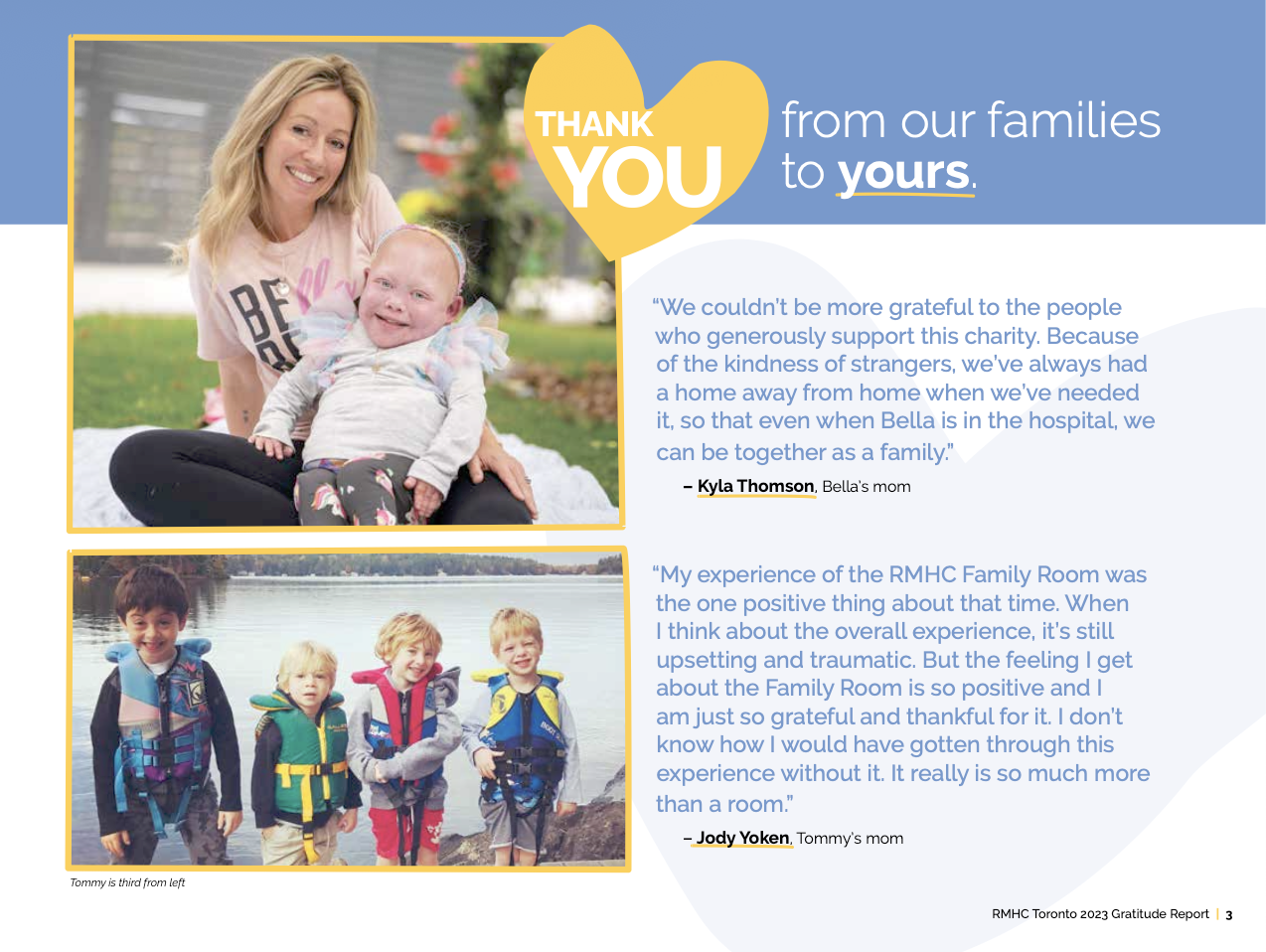
Below are two of the stories we featured in the report. (Also note: none of the donors are holding cheques!)

Tip #3 - You don’t have to report back on EVERYTHING!

Some clients feel like they need to report back on absolutely everything that happened over the past year — every event, every large donation, every new program or program change — everything!

But, as you might imagine, this can be overwhelming for the reader, and leave you with a 32-page report that no one actually reads.

Pick a few key highlights to focus on — you can always share a link where people can learn more if they want to.

Tip #4 - Donor lists are unnecessary

That is all.

But seriously.

If you are determined to list donor names — at least put a link to them online. No one needs to flip through pages and pages of names that mean nothing except to the person whose name it is.

Tip #5 - People are busy! Be memorable and keep it simple.

How long does your report really need to be? Long enough to share what you need to share — and no longer!

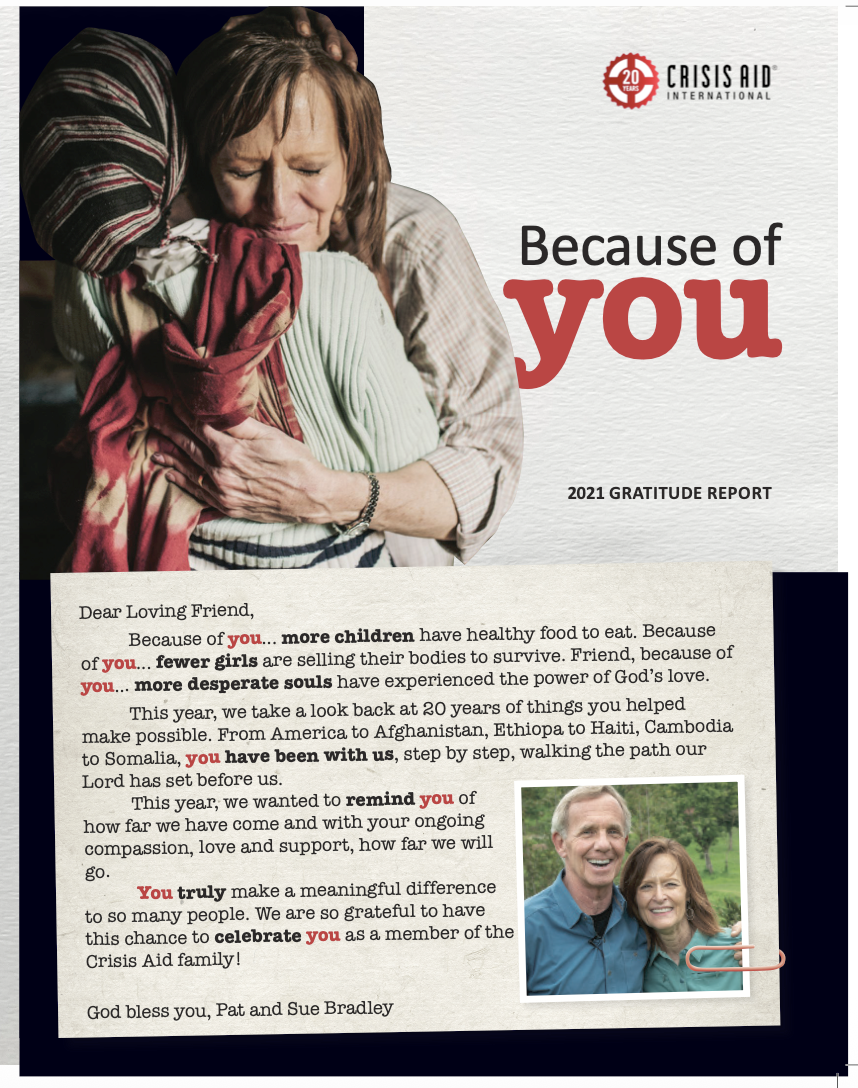
This one was just six pages.

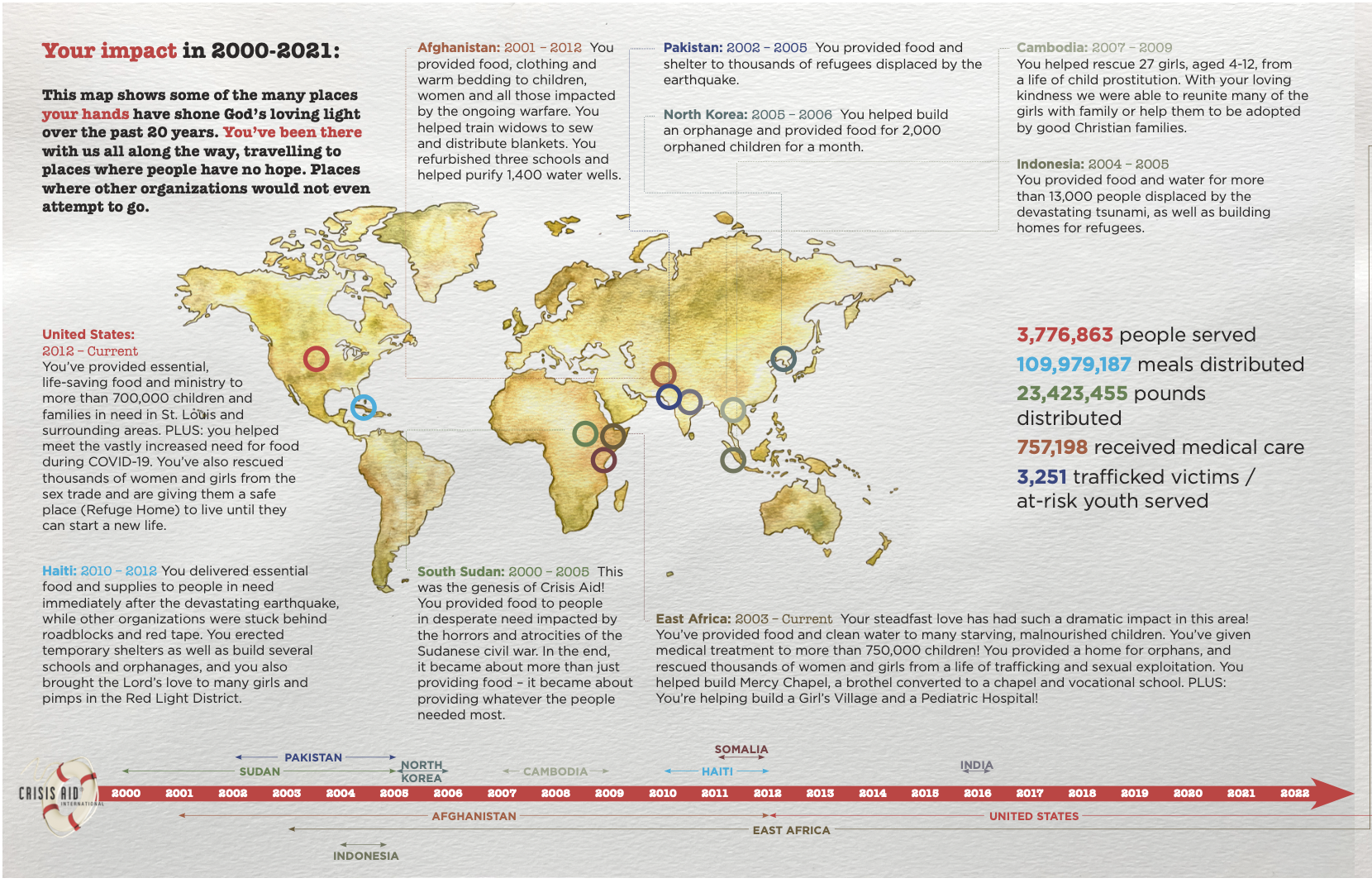
The cover had a compelling photo and compassionate note from the organization’s founders. The inside shared an illustrated map to show impact.

Simple. Impactful. To the point.

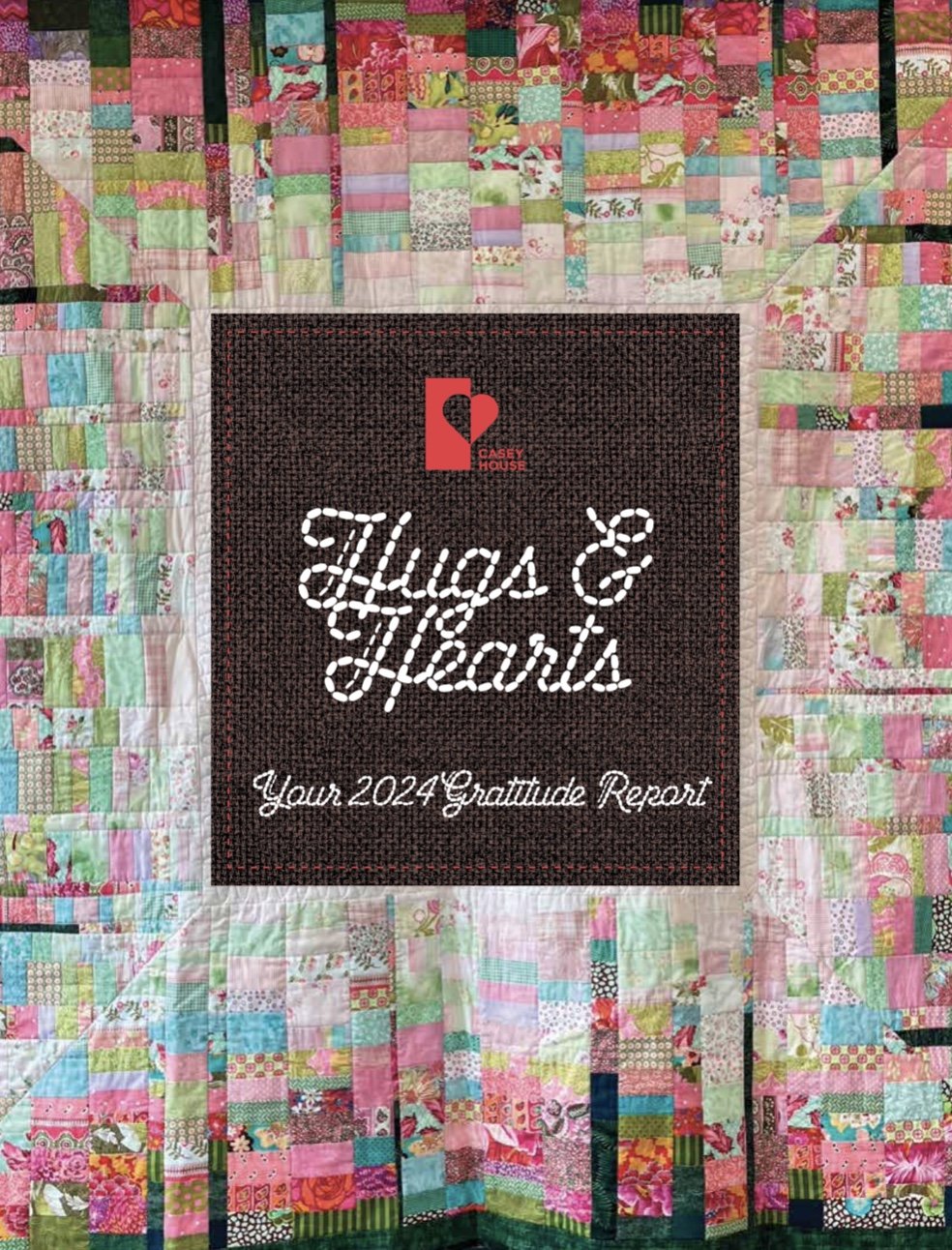
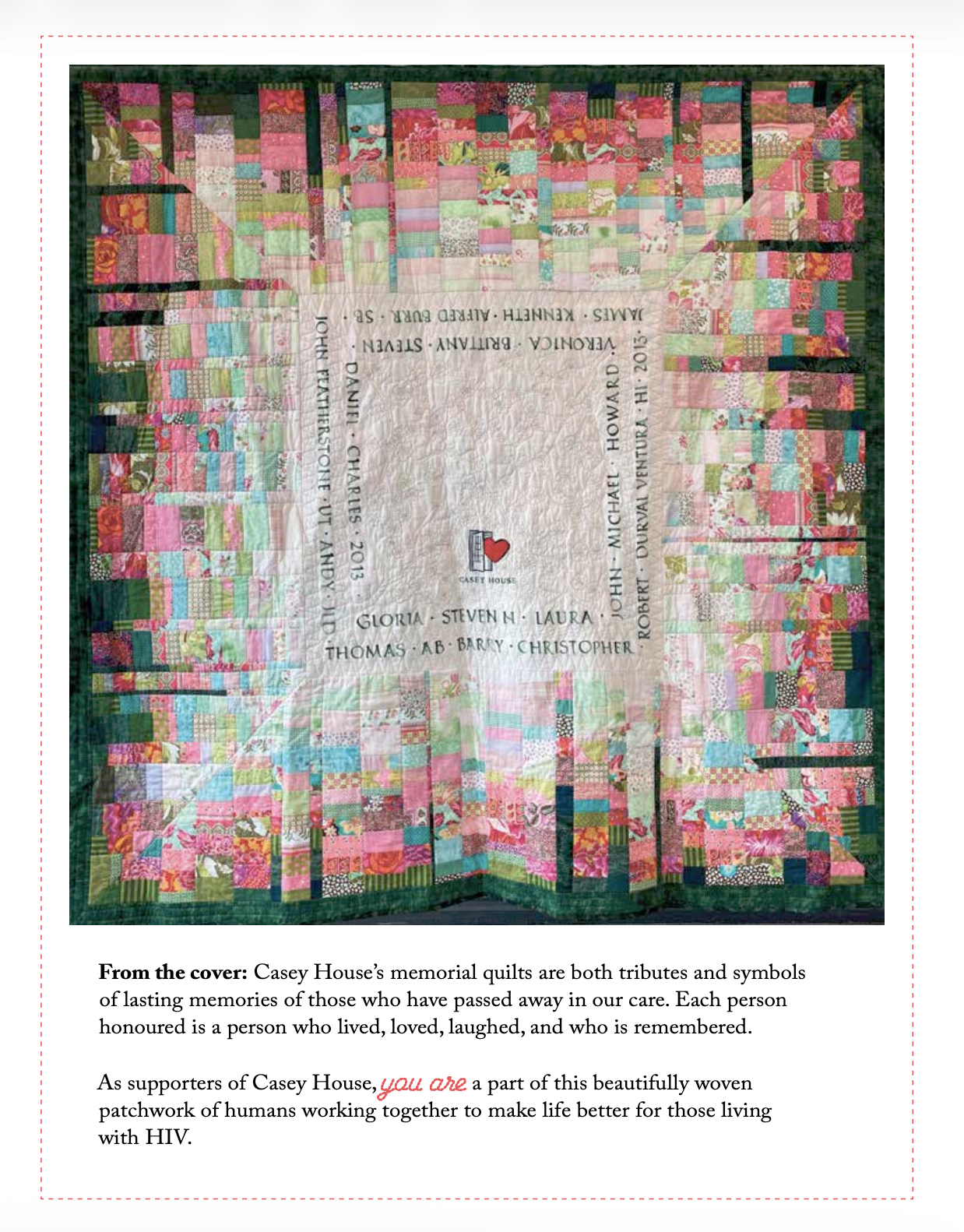
The following report features a quilt on the cover — which is going to stand out among the other reports your donors might receive.

The back page shares the reasoning, linking it back to the donor and to the mission of this particular organization.

This particular report also had pie charts in the shape of hearts — now you can’t tell me that is not going to stand out to your donor!

I’ve also worked on a gratitude report for a hospital foundation that had an illustration of a bandaid on the cover — and a little note from the bandaid itself.

Do you think donors would have paid attention to that?

Absolutely.

These are just five tips to help you start thinking about Annual Reports a little differently. How might you transform your own organization’s report into one that is packed with Gratitude?

I’d love to hear from you on what you’ve done with your own reports.

If you’d like to see some other examples, or want to chat about how I might help you to write your own Gratitude Report, Newsletter, Impact Report, Case for Support, or other donor-facing materials — please do get in touch!

Next
Next

A (MidLevel) Appeal You can Steal